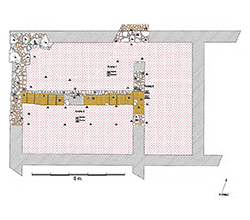
Espacios de almacenamiento y producción de la Turdetania. Una reflexión más allá de los hornos
DOI:
https://doi.org/10.51679/ophiussa.2020.66Palavras-chave:
Turdetanos, estructuras de almacenamiento, producción, ánforas, Segunda Edad del HierroResumo
Se presenta un recorrido por las estructuras arqueológicas relacionadas con funciones de producción y comercialización de mercancías agropecuarias en la Turdetania durante la Segunda Edad del Hierro, entre los siglos VI y II a.C. En concreto, se analizan tanto hornos cerámicos como las estancias auxiliares anexas a ellos, los edificios interpretados como almacenes de productos alimenticios y los paralelos en cuanto a estructuras de procesamiento de la materia prima antes de la fase de envasado, haciendo especial énfasis en los espacios que cuentan con ánforas de tipología similar a las turdetanas en su registro material. A través de estos elementos y, sobre todo, de las lagunas en las evidencias arqueológicas, se plantea una reflexión acerca del grado de información actual sobre el sistema económico turdetano, su continuidad desde la Primera Edad del Hierro y su viraje comercial a partir del siglo IV a.C.