Mourning in the face: funerary ablations in the ancestral Mediterranean
DOI:
https://doi.org/10.51679/ophiussa.2021.85Keywords:
Funerary ritual, laceration, archaeology of religion, Chalcolithic idols, grimacing masksAbstract
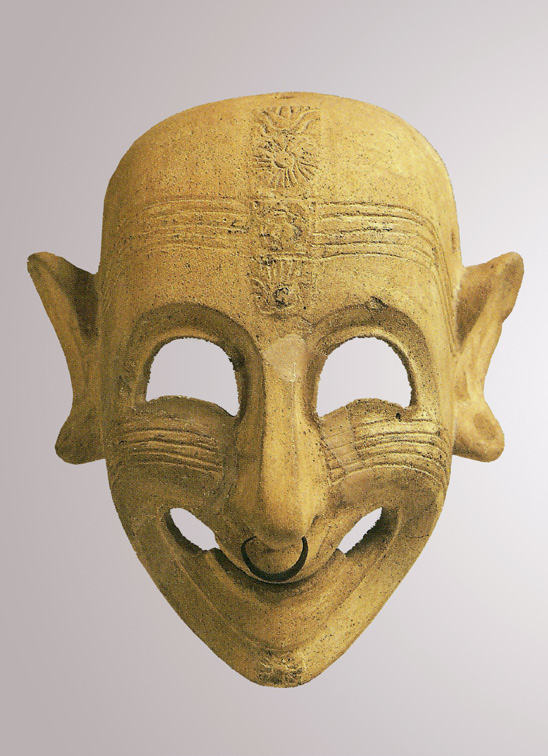
Some schematic rock paintings, numerous Neolithic and Chalcolithic figurines of the Iberian Peninsula and several Phoenician-Punic masks found along the Mediterranean area have as a common characteristic some incisions on the cheekbones. Traditionally, these marks have been interpreted as tattoos or insertions of rods through the nose. Faced with these hypotheses, it is proposed that these facial lines could be scratches and lacerations as symbols of mourning in the face. In support of this idea, several textual references from different periods are analyzed, as well as various archaeological elements.
Downloads
Published
2021-12-15
How to Cite
Gómez Peña, Álvaro, and José Luis Escacena Carrasco. 2021. “Mourning in the Face: Funerary Ablations in the Ancestral Mediterranean”. Ophiussa. Revista Do Centro De Arqueologia Da Universidade De Lisboa 5 (December). https://doi.org/10.51679/ophiussa.2021.85.
Issue
Section
Articles